

THERAPEUTIC APPROACH
Cognitive Behavioural Therapy
WHAT IT IS
What Is Cognitive Behavioural Therapy?
Cognitive Behavioural Therapy, commonly known as CBT, is a structured, goal-oriented, and evidence-based therapy that explores how thoughts, emotions, and behaviours influence one another to support meaningful change. Developed by psychiatrist Aaron Beck in the 1960s, CBT was first used for depression and has since been adapted for concerns such as anxiety, stress, burnout, ADHD-related challenges, and emotional regulation. In CBT, you and your therapist work together to identify unhelpful thinking patterns, often called cognitive distortions, and develop more balanced, flexible, and supportive ways of responding.
THE FRAMEWORK
The Cognitive Behavioural Model
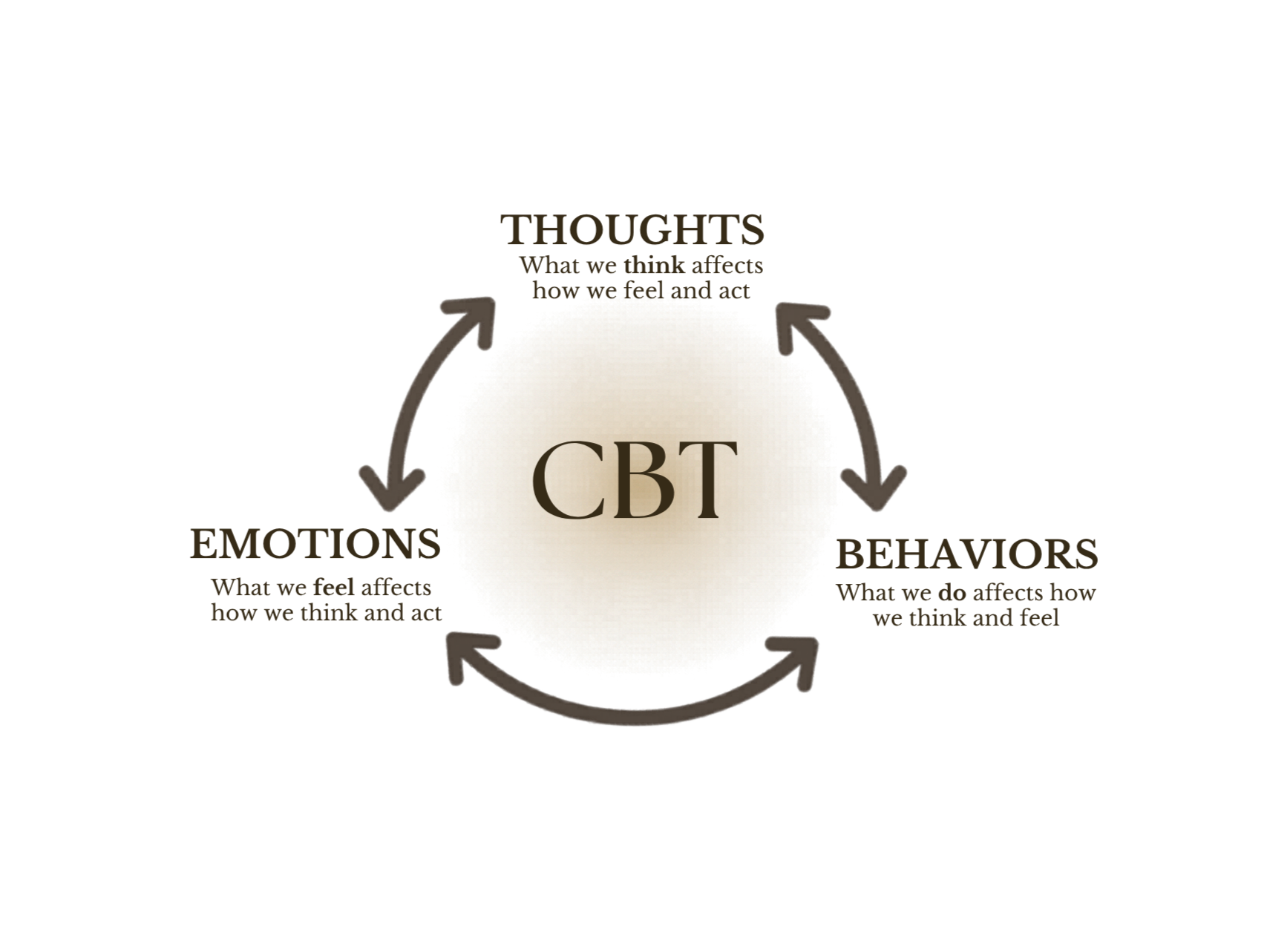
CBT is built on a foundational insight: thoughts, emotions, physical sensations, and behaviours are not separate, they influence each other in continuous cycles. Changing any one element creates a ripple effect through the others.
WHAT HAPPENS IN SESSIONS
Core CBT Techniques
A structured tool for catching automatic thoughts in the moment, examining the evidence for and against them, and developing a more balanced perspective.
❋ Thought Records
Identifying and challenging cognitive distortions, such as catastrophising, black-and-white thinking, or mind reading, and replacing them with accurate alternatives.
❋ Cognitive Restructuring
Particularly effective for depression, scheduling meaningful, pleasurable activities to break cycles of withdrawal and inactivity that deepen low mood.
❋ Behavioural Activation
A structured approach to breaking down overwhelming problems into manageable steps, building confidence and reducing helplessness.
❋ Problem-Solving
Evidence-based techniques including diaphragmatic breathing, progressive muscle relaxation, and mindfulness practices to regulate the nervous system.
❋ Relaxation & Mindfulness
Gradually and safely confronting feared situations or triggers, reducing avoidance and allowing anxiety responses to diminish through direct experience.
❋ Exposure Therapy
WHO IT HELPS
Mental Health Concerns CBT Can Support
CBT has the most extensive evidence base of any psychological treatment, with hundreds of randomized controlled trials demonstrating its effectiveness across a wide range of conditions, and is recommended as a first-line or adjunct treatment for:
Bipolar Disorder
Obsessive-Compulsive Disorder
Post Traumatic Stress Disorder
Schizophrenia and Psychosis
Specific Phobias
Substance Use Disorders
COMMON QUESTIONS
Frequently Asked Questions
How many CBT sessions will I need?
CBT is often offered over 8 to 20 sessions, but the number of sessions can vary depending on your goals, current challenges, symptom intensity, and individual needs.
Is CBT suitable for everyone?
CBT can be helpful for many people, but it is not the right fit for everyone. It works best when you feel ready to actively reflect, try new strategies, and practise between sessions. If CBT doesn’t feel like the best fit for you, we can talk through other therapy approaches that may feel more supportive.
Does CBT involve homework?
Yes, between-session practice is a key part of CBT. Tasks are always agreed collaboratively and tailored to your capacity.
Is CBT just positive thinking?
CBT is not about “just thinking positively.” Instead, CBT helps you evaluate thoughts realistically, understand where certain patterns may have come from, and notice when thoughts that were once accurate or protective are no longer helpful. The goal of CBT is to better understand and address challenges with clarity, not to force positivity.
Can CBT be done online?
Yes. CBT translates very well to online delivery, and research confirms that remote CBT produces outcomes equivalent to in-person sessions for most presentations. We offer both formats to suit your preference and circumstances.
I've tried CBT before and it didn't work?
Not all CBT experiences are the same. The therapeutic relationship, accuracy of the case formulation, and fit between the approach and your needs all matter. We welcome open conversations about previous CBT experiences, what did or did not feel helpful, and whether other therapy approaches may be a better fit for you.
Take the next step
Use your free consultation to ask questions, get a feel for the approach, and explore which therapy style may best support your needs
Related areas
Anxiety
Depression
Panic