
Neurodiversity

The term neurodiversity is increasingly used in conversations about mental health, identity, and inclusion. It refers to the natural differences in how human brains function. Rather than being a diagnosis or label, neurodiversity is a way of understanding and accepting that not all brains operate the same way and that’s not just okay, it’s valuable.
Where the Term Neurodiversity Comes From
Neurodiversity is a concept that shifts away from deficit-based views and instead understands differences in thinking, behaviour, and processing as natural variations within human diversity. The term and its underlying ideas originated within autistic activist communities, reflecting a collective effort to promote more affirming and inclusive ways of understanding neurodivergence (Botha et al., 2024).
The Neurodiversity Movement
The neurodiversity movement grew from this idea, driven by Autistic self-advocates who shifted the conversation from viewing neurological differences as disorders to recognizing them as natural. The movement promotes acceptance, accommodation, and pride in neurodivergent identities, advocating for changes in education, workplaces, and healthcare systems.
Expanding the Scope of Neurodiversity
While the term originally focused on Autism, it now includes a broad range of neurological differences, such as ADHD, dyslexia, dyspraxia, dyscalculia, Tourette syndrome, obsessive-compulsive experiences, sensory processing differences, and highly sensitive people (HSPs). Neurodivergence is not confined to formal diagnoses. Many individuals self-identify based on their unique experiences and ways of thinking.
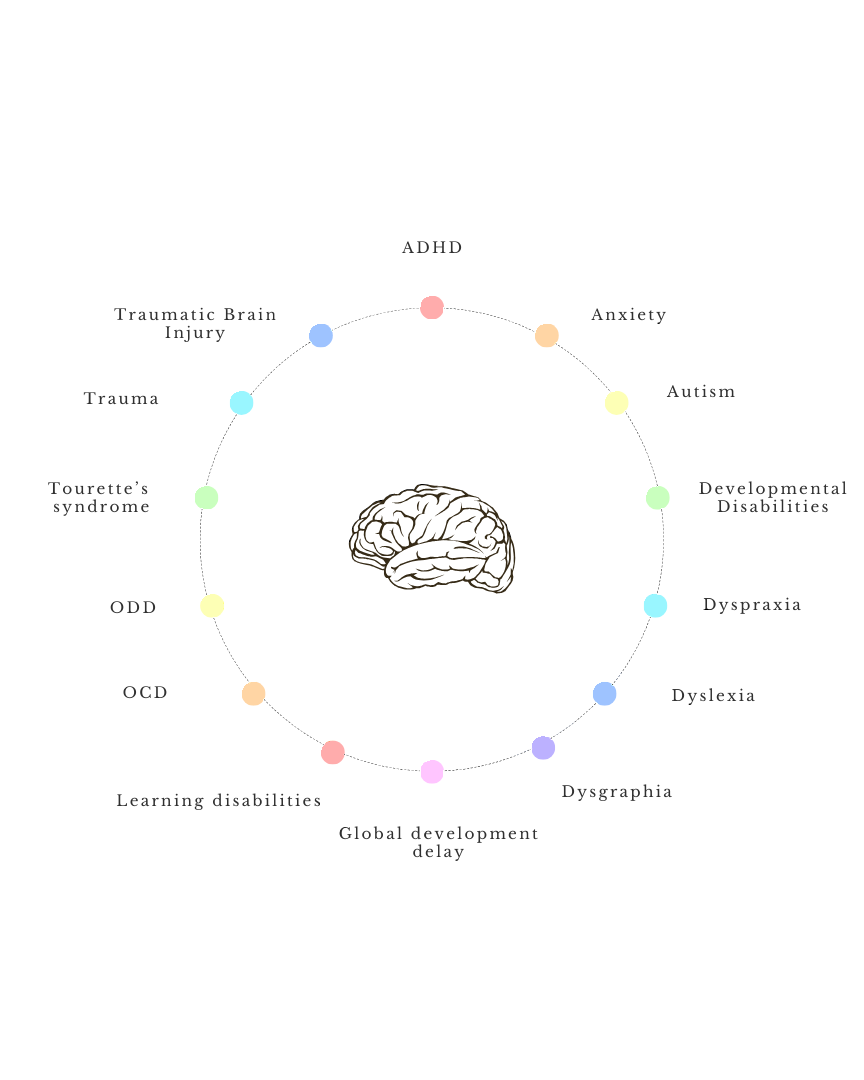
Created by Neurodiversity Wellness Collective, this diagram highlights a range of neurodivergent identities such as ADHD, autism, and dyslexia. Keep in mind this visual reflects only some forms of neurodivergence
Embracing neurodiversity helps create a more inclusive and understanding world, where every individual’s unique neurological makeup is valued, and neurodivergent individuals can access affirming, culturally sensitive, and trauma informed counselling and psychotherapy services.
References
Botha, M., Chapman, R., Giwa Onaiwu, M., Kapp, S. K., Stannard Ashley, A., & Walker, N. (2024). The neurodiversity concept was developed collectively: An overdue correction on the origins of neurodiversity theory. Autism, 28(6), 1591-1594. https://doi.org/10.1177/13623613241237871