

Mental Health and well-being Resources
Anxiety Resources
Browse by Type
What is Anxiety
Anxiety is the nervous system’s natural and adaptive response to perceived threats, rich sensory input, or uncertainty. When anxiety remains present over extended periods, feels intense relative to the environment, or limits everyday choices and navigation. Anxiety emerges from a interplay of biology, processing style, early life experiences, and environmental factors.
Types of Anxiety Disorders
Selective Mutism
A situation-specific nervous system response that makes speech temporarily inaccessible during social or high-expectation scenarios involving potential evaluation or scrutiny, often leading to reduced social engagement in those settings.
Generalized Anxiety Disorder
Persistent, heightened sensitivity and deep processing across multiple life areas (e.g., work, health, relationships, finances). Accompanied by somatic responses such as muscle tension, fatigue, and variations in sleep patterns.
Social Anxiety Disorder
Intense awareness and caution around social or performance situations where judgment, embarrassment, or evaluation by others may occur. This often leads to setting boundaries or stepping away from social interactions to protect energy and well-being.
Specific Phobia
A strong fear response triggered by particular objects or situations (e.g., heights, needles, animals, flying).
Panic Disorder
Recurrent, sudden surges of intense somatic and emotional overwhelm (panic responses), paired with ongoing vigilance regarding future occurrences and their impact, leading to self-protective changes in routine.
Health Anxiety
A focus on physical well-being and health-related bodily sensations. Internal sensations are processed with high vigilance, prompting protective behaviours like body-checking and ongoing focus on personal safety and medical reassurance.
Learn More about the Specific Types of Anxiety Disorders
Agoraphobia
Caution and avoidance regarding spaces where exiting or accessing support during a panic response might feel challenging, such as crowds, public transport, open areas, or being away from home independently.
Separation Anxiety Disorder
Deep attachment and strong distress responses when separated from key support figures, experienced across all ages. This can manifest as difficulty being alone, vivid separation dreams, and deep concern for the safety of loved ones.
Handouts and Worksheets
CCI Anxiety Self-Help Resources
Free worksheets and printables.
ADAA Free Educational Resource Hub
Articles, guides, and peer support networks.
Books
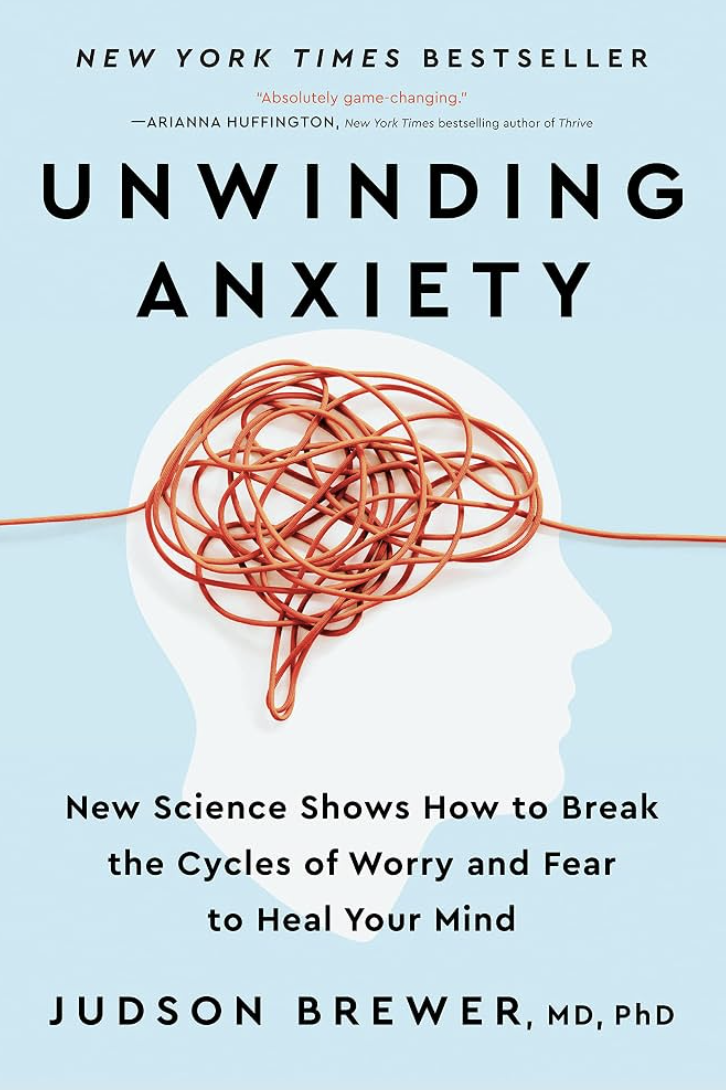
‘Unwinding Anxiety’
by Dr. Judson Brewer