

Mental Health and well-being Resources
Mood Disorder Resources
Browse by Resource Type
What Is a Mood Disorder?
Mood disorders are variations in emotional experience and is a natural part of human diversity, though they can sometimes feel intense or out of alignment with your surrounding circumstances. Depression is one well-known aspect of this spectrum, alongside other distinct ways of experiencing mood dynamics, such as bipolar experiences, persistent low-energy states (dysthymia), subtle emotional cycles (cyclothymia), and seasonal shifts.
Types of Mood Disorders
Major Depressive Disorder (Depression)
Depression can bring persistent low energy, loss of interest, shifts in sleep and appetite, and difficulty concentrating, with episodes lasting weeks or months.
Cyclothymic Disorder (Cyclothymia)
A milder form of cycling mood, with periods of hypomanic symptoms and periods of depressive symptoms over at least two years, without reaching the threshold of a full episode. Often described as an "emotional rollercoaster," it benefits significantly from therapy and self-awareness work.
Persistent Depressive Disorder (Dysthymia)
A milder but longer-lasting form of depression, lasting two or more years. Those with dysthymia may feel chronically low, joyless, or fatigued, sometimes for so long they believe it is simply "who they are."
Seasonal Affective Disorder (SAD)
A recurrent depressive disorder linked to seasonal changes, most commonly emerging in autumn and winter when daylight hours shorten. Symptoms include low energy, oversleeping, increased appetite, and withdrawal. Light therapy, counselling, and lifestyle support are all effective approaches.
Bipolar I & II Disorder
Bipolar disorder involves episodes of depression alongside periods of elevated or irritable mood (mania in Bipolar I; hypomania in Bipolar II). During elevated episodes, a person may feel unusually energetic, require little sleep, or make impulsive decisions. These shifts can be disorienting and are often misunderstood.
Premenstrual Dysphoric Disorder (PMDD)
A form of premenstrual syndrome that significantly disrupts mood, relationships, and functioning in the luteal phase of the menstrual cycle. Characterized by intense irritability, depression, or anxiety that lifts with menstruation. A real and diagnosable condition deserving of clinical attention.
Learn More about Mood Disorders
Canadian Network for Mood and Anxiety Treatments
Provides evidence-based clinical guidelines, web apps, and educational tools for healthcare professionals, patients, and families managing mood and anxiety disorders.
Books
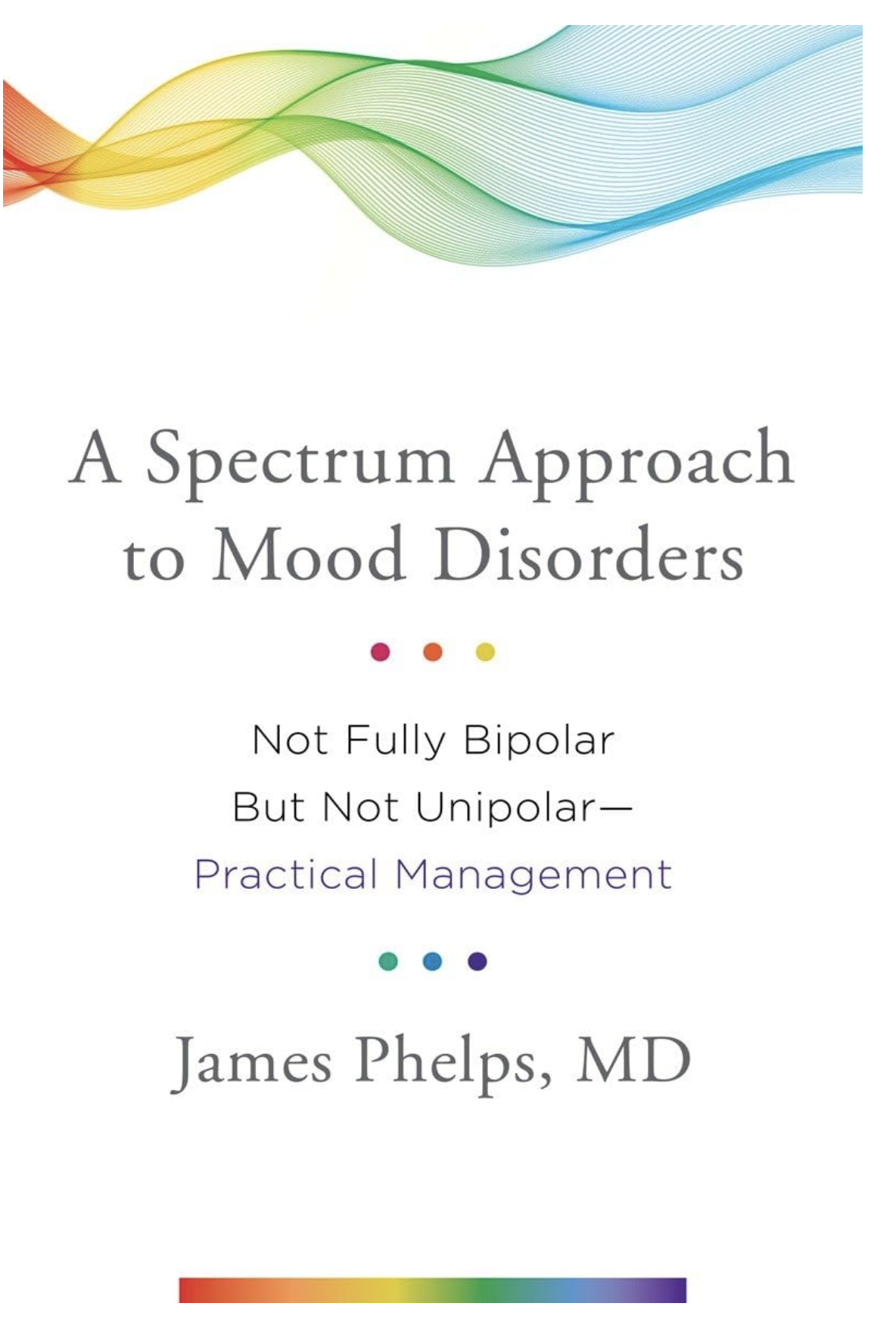
‘A Spectrum Approach to Mood Disorders’
by James Phelps, MD