
Body Doubling for the Neurodivergent Brain
What Is Body Doubling?
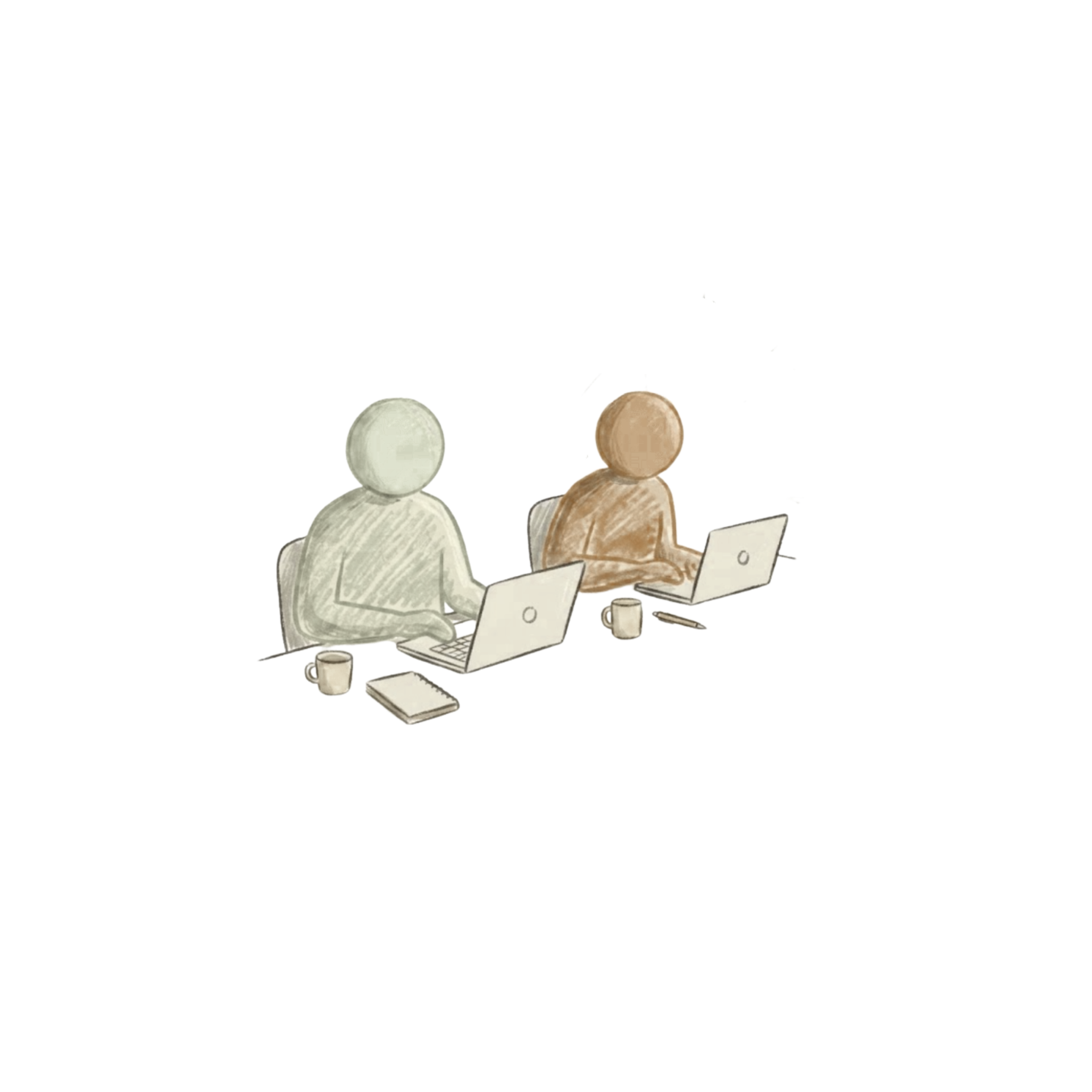
Body doubling is a simple focus strategy where you do your tasks alongside someone else, whether in the same room, on a video call, or through a live stream, to signal your brain it's time to focus. The term has been used in ADHD communities since the 1990s, but recent research shows neurodivergent adults instinctively use a person's presence, in-person, online, or one-sided, to help start, maintain focus, and finish tasks.
Why it works
The mechanisms behind body doubling connect directly to what makes task initiation difficult for ADHD and autistic brains.
⚓ External anchoring
Having another person around can be grounding, as it provides the external structure your brain needs to focus when internal motivation falls short.
🧠 Co-regulation
Co-regulation works because a calm, predictable presence helps settle your nervous system. For autistic adults who get overwhelmed, having a body double makes the space feel safer and the task feel more approachable, without adding any pressure or expectations.
✔️ Gentle accountability
Knowing someone else is nearby adds a subtle social weight to what you're doing, without any pressure to perform or be watched.
🔓 Breaking autistic inertia
Autistic inertia can make getting started feel almost impossible on your own, so having another person around helps you take that first step.
The Different Forms of Body Doubling
Body doubling doesn’t require a dedicated partner or scheduled session, as research suggests the effect transfers across all of them.
In Person
Working alongside a friend, partner, or colleague who is doing their own thing. Neither person needs to interact or engage with the other's work.
Virutal (Video call or co-working)
Video calling while both people work independently. Body doubling apps can offer structured virtual sessions.
Asynchronous (Study-with-me content)
Recorded or livestreamed study-with-me videos on YouTube or Twitch can be helpful even if the content is prerecorded and the creator is not aware of the viewer.
Body doubling tends to help most with
✦ Important tasks that you can't find the drive to start on your own.
✦ Administrative work that requires a lot of attention without stimulation, such as emails, forms, and paperwork.
✦ Getting back to a task after a break or interruption, where jumping back in is often harder than starting it the first time.
✦ Work that involves sitting still for a long time.
✦ Tasks that you've put off for so long they feel scary or overwhelming, making it even harder to begin.
What body doubling is not
Body doubling isn’t the same as accountability because nobody is checking on you, tracking your progress, or expecting a report at the end.
The person with you doesn’t need to know what you are working on, ask how it’s going, or say anything at all.